AI PRODUCT SECURITY & COMPLIANCE

Ship an AI product
your enterprise customers
can trust

Find the vulnerabilities in your AI product, fix them, and keep it protected in production. One partner from first assessment to continuous monitoring.

  • Expert-led AI red teaming
  • Real-time threat detection
  • OWASP Top 10 for Agentic Applications
  • EU AI Act & ISO 42001 aligned
  • Cloud, isolated, or self-hosted

Security is now part of the sale

When your product runs on AI, your customers' data runs through your AI layer. Buyers know it, and their security reviews ask about it.

Enterprise deals need proof

Security questionnaires now ask how your AI handles prompt injection and data leakage. Documented testing and monitoring keep the deal moving.

A new attack surface

Prompt injection, agent abuse, RAG poisoning. The failure modes of AI products are different, and classic security tooling does not see them.

Regulation is arriving

The EU AI Act and ISO 42001 expect adversarial testing and ongoing monitoring of AI systems. Evidence beats assurances, for regulators and for customers.

One path from unknown risks to continuous cover

Three stages. Each stands on its own. Together they take your AI product from untested to monitored.

Stage 01 Understand

Discovery

We map your AI product's attack surface together: architecture, data flows, agent capabilities, and what a breach would actually cost you. No fixed format. Sized and scoped on the intro call.

  • Architecture and data-flow review
  • Threat picture ranked by business impact
  • A scoped plan for the red team

Book a Discovery Call

Stage 02 Test

AI Red Teaming

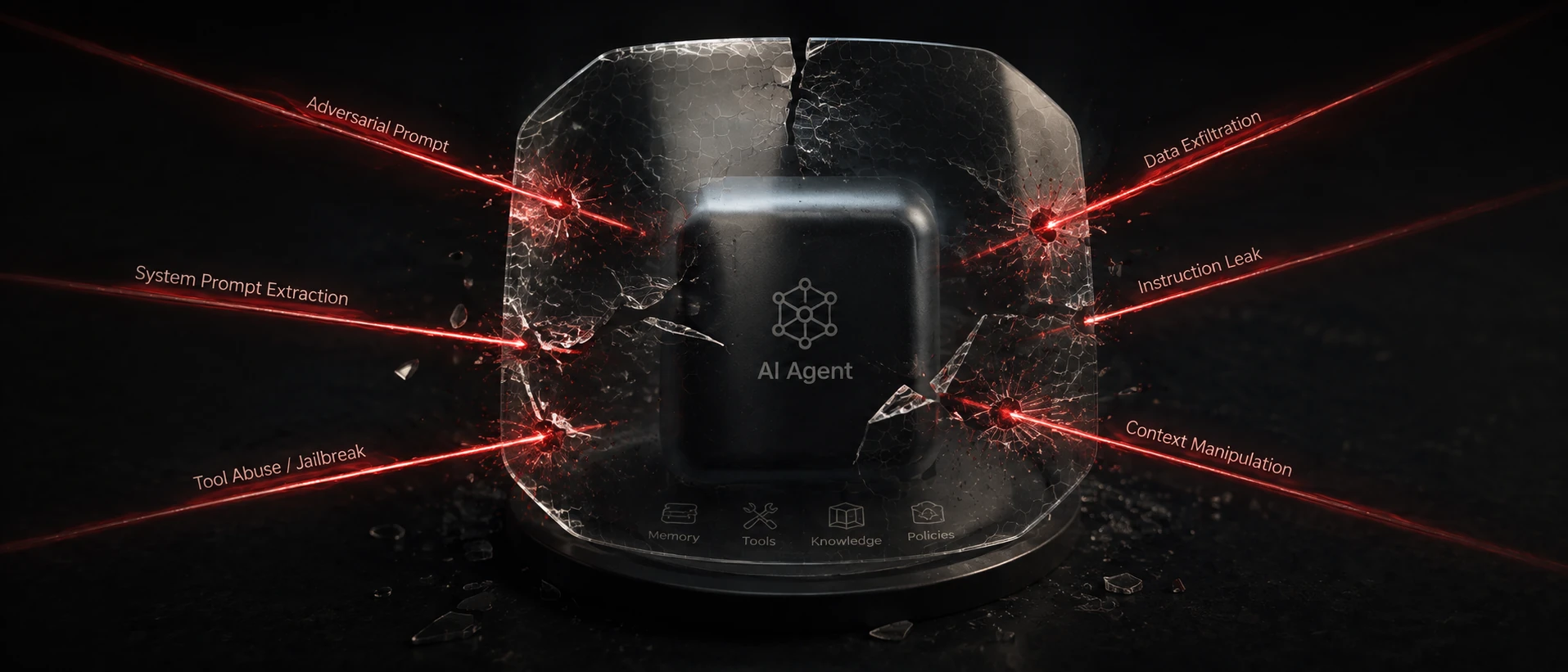
Human security experts attack your AI product by hand while our AI tooling scales the attack. Every finding arrives reproducible, severity-rated, and mapped to the OWASP Top 10 for Agentic Applications.

AI red team attacking an AI agent with adversarial prompts, tool abuse, and data exfiltration attempts

Explore AI Red Teaming

Stage 03 Protect

Stihia Sense

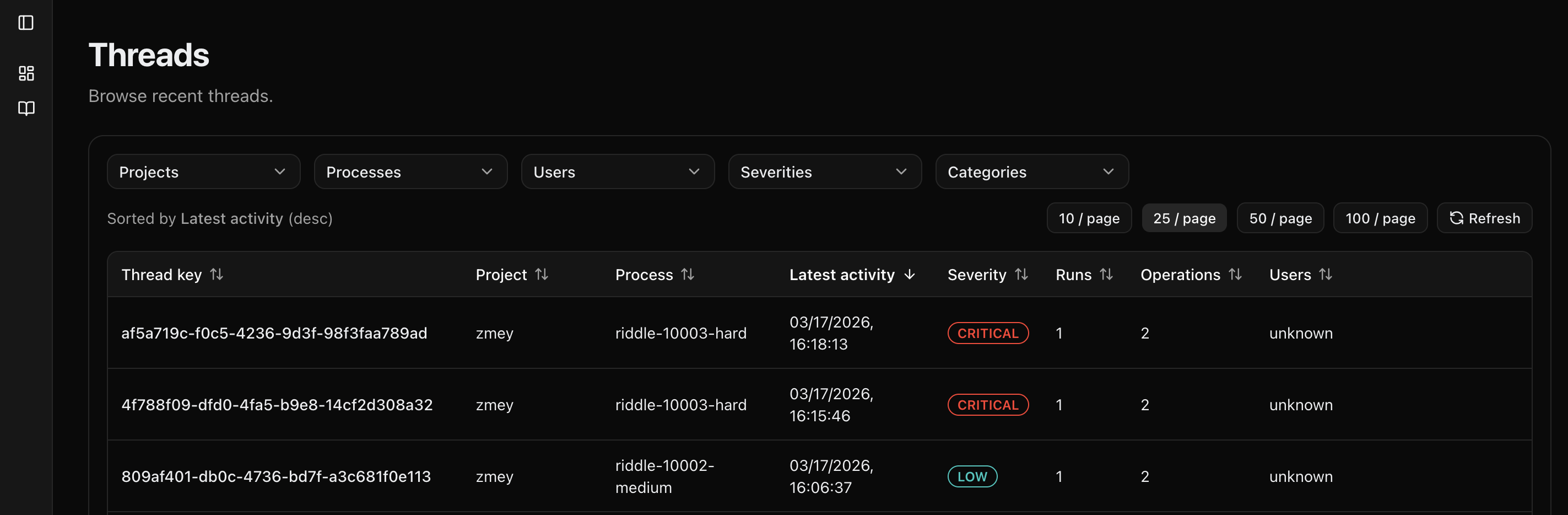
Real-time threat detection across prompts, tools, and agent actions. Three detection layers, alerts in your SIEM through OpenTelemetry, deployed in the cloud, an isolated instance, or on your own infrastructure.

Stihia Sense console showing AI conversations grouped by alert severity

Explore Stihia Sense

Testing finds it. Monitoring catches it.

A red team shows where your product breaks today. Stihia Sense watches what attackers try tomorrow.

Compliance evidence, not compliance theater

Every stage produces artifacts you can hand to an auditor, a regulator, or an enterprise security review.

What the journey leaves behind

  • Findings report with reproduction steps and severity ratings
  • Re-test addendum: each finding marked fixed or still open
  • Coverage map of what was attacked and what held
  • Real-time alerts with a forensic audit trail
  • Evidence pack ready for EU AI Act and ISO 42001 files

EU AI Act

Adversarial testing and post-market monitoring, documented the way the Act expects.

ISO 42001

AI management system evidence: risk assessment, testing, and operational monitoring records.

ISO 27001 & SOC 2

Security testing and monitoring controls that slot into the audits you already run.

DORA & NIS2

Resilience testing and incident detection for AI systems in regulated European industries.

Frequently asked questions

What is AI product security?

AI product security covers the failure modes that appear when LLMs and agents become part of your product: prompt injection, data leakage through model output, agent tool abuse, and poisoned knowledge bases. Classic application security does not test for these, because they live in model behavior rather than in code. Securing an AI product means adversarial testing to find the weaknesses and runtime monitoring to catch what slips through in production.

How is AI red teaming different from a penetration test?

A penetration test targets your infrastructure and code. AI red teaming targets the behavior of the model and the agents built on it: multi-turn manipulation, indirect injection through retrieved content, and stochastic failures that only show up across repeat trials. Our findings are reproducible, severity-rated, and mapped to the OWASP Top 10 for Agentic Applications. It complements a classic pentest rather than replacing it.

What does the discovery stage involve?

Discovery is a collaborative mapping of your AI product: architecture, data flows, agent capabilities, and the business impact of realistic failures. You leave with a threat picture and a scoped plan for testing. There is no fixed format or price. We size it together on the intro call.

Does this help with EU AI Act and ISO 42001 compliance?

Yes. The red teaming evidence pack documents adversarial testing, and Stihia Sense provides the ongoing monitoring and audit trail both frameworks expect. The same artifacts support ISO 27001 and SOC 2 audits and the security reviews your enterprise customers run before buying.

Can Stihia Sense run in our own infrastructure?

Yes. Sense deploys as managed cloud in EU data centers, as an isolated single-tenant instance, or fully self-hosted for air-gapped environments. You choose where the data lives. Detection data exports as OpenTelemetry signals to your SIEM in every deployment model.

How long does the journey take?

Discovery is short, typically a conversation and a focused review. A red teaming engagement is measured in days or weeks and scoped up front, so you know what you are committing to. Sense integrates through a Python SDK for custom AI or through a daemon and API for well-known tools, so the first signals arrive quickly. You can also take any stage on its own.

Start with a conversation about your AI product.

Tell us what you are building. We will map the risks together and scope the first step on a half-hour call. No obligation past that.